
Dead or in Jail: The Burden of Being a Black Man in America
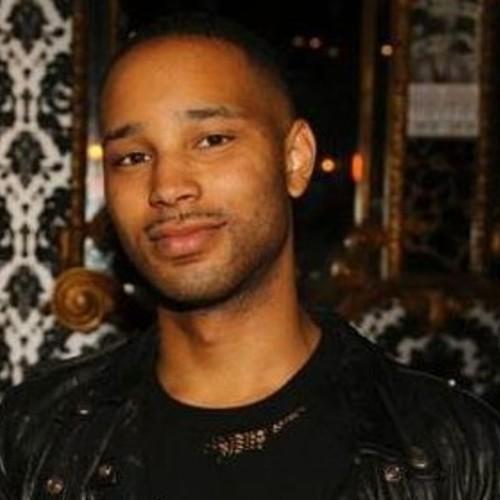
Senior Editor

All photos by Awol Erizku
"The day you were born, there was a pine box and a prison cell built with your name on it."
Throughout my childhood and adolescence, my father said that to me countless times, especially just as I was walking out the door. The first time I remember hearing those words, I had to have been about six or seven; I was so young I didn't really understand what he meant. I had yet to grasp the burden that comes with being young and black and male in America. It just sounded scary, and after hearing it—given what little I understood about race at the time—I was left with the distinct feeling that I was cursed.
But that was dad's way. He always tried to speak to me like I was a little man. And not because he was on some cheap machismo trip or because he had a taste for the macabre—it was because he legitimately thought if I didn't understand this lesson early on, I might not make it to age 25.
Related: Black Lives Matter
The phrase "dead or in jail" loomed large over my adolescence, as I think it does for many young black men today. The New York Times estimates that there are 1.5 million "prime age" black men in America who are "missing" from society today, meaning they are either behind bars or pushing up daisies. How they got there is a confluence of the micro and the macro—individual choices and a game with incredibly high stakes that's been fixed against them from the start.
Allowing your child to play that game without understanding the rules is tantamount to leading them to slaughter. My parents understood this, not just as blacks who lived through the Civil Rights era but as retired police officers who saw the way race played out on streets and inside the municipal courts in the city of Cleveland.
The storied legacy of the premature death of black men (homicide is still our greatest killer, according to CDC data) has arguably been eclipsed by the mass incarceration of black nonviolent drug offenders. And although President Obama's administration has advanced sentencing reforms and clemencyinitiatives that will help reign in this injustice, we're going to be living with the fallout for generations.

Right now, blacks make up 12 percent of the population, but almost 60 percent of those doing time in state prison for drug-related offenses—and according to the Sentencing Project, these black prisoners are serving almost as much time for their drug offenses as whites are for actually violent crimes.
That is the great equalizer of the black American experience, whether you grow up in the whitest suburbs like I did or in the grimiest ghettos: Interacting with police is fraught with peril and inequity. Despite my familial connections to law enforcement—two of my great-uncles, both my parents, my uncle, and my sister have all served or are serving on the force in Cleveland—I know that sick scenes like the unnecessary arrest of Prairie View A&M grad Sandra Bland, who died in custody, or the brutal treatment of black teens at Craig Ranch North Community Pool in McKinney, Texas, earlier this summer are not exceptions to the rule. They are the norm—indignities etched into the everyday experience of being black in America. And even I—with my white friends and my media job and my master's degree in publishing—can still get caught up in that when I get stopped by the cops. Although we live in a country with an unhealthy obsession with status and wealth, whether you're in a Pinto or a Porsche, wearing a hoodie or Helmut Lang, when the law comes down on you, you're still a nigger.
Continued below.
RECOMMENDED

The Evolution of Black Masculinity Through Fashion

Eric Garner and the Plague of Police Brutality Against Black Men
How Did Victor White III Die in the Backseat of a Cop Car?
What Am I Saying When I Say 'Nigger'?
I think that's why the last few years have been so terrifying for me as I've seen the names cycle through from Trayvon Martin to Kimani Gray to Victor White to Eric Garner to Michael Brown to Tamir Rice to Walter Scott to Freddie Gray to Samuel DuBose. I know that no matter how well I play the game, no matter how cognizant I am of the rules, it could happen to me. I think about it when I walk past the police station at the end of my block in Brooklyn. I ask myself: Is today going to be the day they are going to fuck with me? And if so, what will I do? Every time a new video shot on police cameras and bystander's cell phones emerges with yet another black life being smothered across the screen, I feel myself getting one step closer to a kind of nihilism about this country and my place in it.
I can relate to the blinding, hot rage I've seen swallow up so many other brothers of my generation, from the pain they foolishly inflict against one another because their arms can't reach the system to the pain they inflict upon themselves because they are trying to escape the realities of the everyday. It's in those fits of anger that I wonder, Were we always destined to live and die this way, like savages in the street or alone in cold cells? And if this is it, why did our parents have us at all? Why bring us into this world where our lives are short and wracked with pain?

This existential thought crossed my mind recently as I stood in the fabricated slave quarters of Oak Alley Plantation in Louisiana, an hour west of New Orleans. I was on a much-needed vacation from immersion in the dizzying American news cycle. The trip was mostly about escape via consumption of hurricanes and daiquiris, but I made a point of visiting a plantation. I grew up in the north, where plantations seemed to exist only in movies and history class, so I wanted to see the remnants of my ancestors' subjugation.
I had imagined visiting a plantation might be tantamount to visiting the Holocaust museum—a kind of solemn, emotive experience. Instead, the Big House tour was sold like Lifestyles of the Rich and Famous, with crowds of Midwestern whites gawking at the good life enjoyed by the masters during the heyday of slavery—with little to no mention from my guide of the blood and tears on which that life was predicated. The slave quarters weren't actually even part of the primary tour—they were self guided, I suspect because of lack of interest and a tacit reaffirmation that their stories and lives still don't matter. As I sat on the crusty stoop of one of the re-created rickety shacks in the towering shadow of the imposing plantation, I wondered how far black folks had actually come from living a life of terror and squalor in those huts, and whether it was worth all of the suffering it took to get here.
That suffering has certainly dissipated, but it's not to the degree you might expect with a black president sitting in the White House. According to Michelle Alexander, author of The New Jim Crow, a black ex-con today barely has more rights—and arguably enjoys less respect—than a freed slave or "free" person living below the Mason-Dixon line during the Jim Crow era. In many ways, the plantations have been exchanged for overpopulated prisons. According to the Washington Post, there are more incarceration facilities in the US than there are degree-granting colleges and universities. And labor from these prisons—where the incarcerated can get paid just pennies on the dollar—produce more than $2 billion in products every year. Most of this labor is on behalf of government agencies, but increasingly, the private sector is cashing in on the cheap, mostly black labor to make coveted consumer items. What else can you call that but modern-day slavery?
Watch Wilbert investigate the unregulated world of drug rehab.
But even if we manage to avoid the death-or-jail-cell quagmire my father warned me about, there's still the plantation in our minds to contend with. The terror we live under today may not be comparable to that of the 1860s, but the fear, the humiliation, and the emasculation remain in subversive and subtle forms, creeping in and crippling us from the inside. Of course, not every altercation between the police and black youth ends in death, but the indignities we endure every day take a different kind of toll. They chip away at our personhood, our humanity, and can very easily make us meek—or else a uniquely American breed of monster.
When I first began to tune into the slew of cryptic videos and horror stories that have been arriving by the boatful in the last few years, I wanted to weep. What I did instead is weep inside until my emotional well went dry. And then I started to feel nothing but a gnawing angst, searing through the sides of my belly.
It's that burning feeling that at one time made me certain I would never bring another black child into this world. For what? To be beaten, to be caged, to be taught to hate himself and everyone who shares the same skin as him? There was a time when I couldn't imagine subjecting anyone else to that curse, that burden.

But I don't feel quite that way anymore. Perhaps the catalyst for the change was when I was standing in those slaves quarters on that plantation, with the call of my ancestors shouting so loud at me that they were impossible to ignore. Up until that point, I had been fixating so much on their suffering‚ our suffering, my own suffering, that I let it eclipse the extraordinary phenomenon of our survival. It was amid the torturous iron shackles and tattered clothes of slaves who'd long since left the realm of the living that I remembered what we had endured.
We survived the perilous Middle Passage, 246 years of being human chattel, a century of Jim Crow, and the past 50 years of mass incarceration and police brutality.
Given all the hateful, wicked, genocidal shit we've been up against since this country's inception, black folks should be wiped out by now. But we're still here, clawing along in the fight for the recognition of our humanity. And on some fronts—many of which are more ceremonial than substantive—we have overcome. The simple fact that I, the descendant of slaves, could come back to that plantation as a freeman—a tourist—signifies there's something special about how our people contended with some of the most abhorrent, virulent oppression in recent human history.

With that legacy, how could I not have a son to push that struggle forward? I owe it to all those who died in order to see me here to keep the fight going and resist those pangs of hopelessness that linger inside my spirit when I see other brothers fall. I should have a son for every Sean Bell and Kalief Browder. I should have ten sons, 100, 1.5 million, one for each of the missing brothers who couldn't find a way to escape the pine box or the prison cell.
Actually, just one would be good enough—one to carry on my family name, and carry on that fire that's been burning since we came to this country in bondage. When he gets to be about six, I'll tell him the same thing my daddy told me. Except I'll add something that I've had a hard time remembering amid the deluge of stories about unarmed shooting victims and disproportionate prison sentences:
"Against those insurmountable odds, many of us overcome. You can overcome."
Follow Wilbert L. Cooper on Twitter.
All portraits by Awol Erizku. Follow Awol on Tumblr and Instagram.
http://www.vice.com/read/dead-or-in-jail-the-burden-of-being-a-black-man-in-america-804


 Posts
Posts



No comments:
Post a Comment